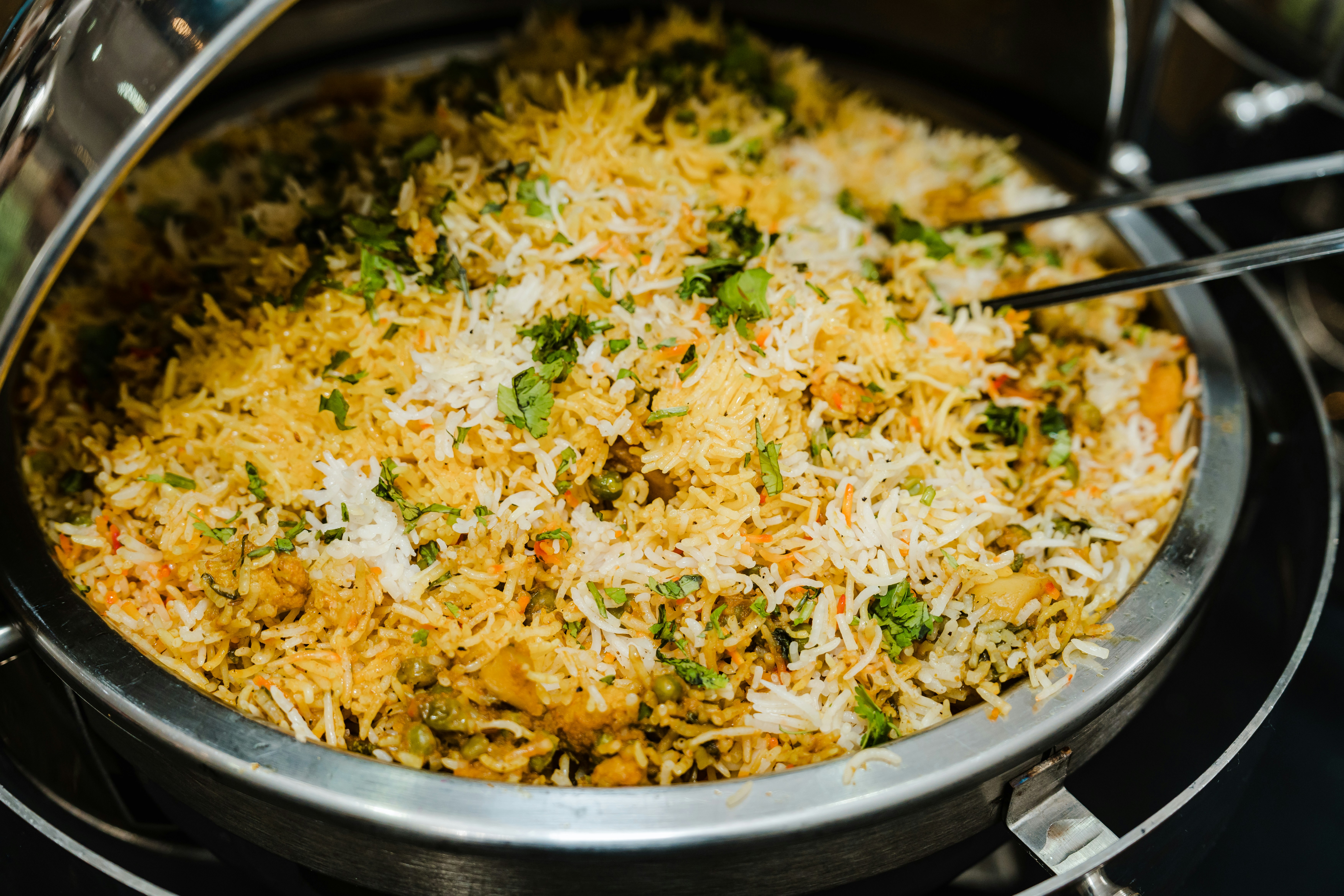
Introduction to Biryani
Biryani is a renowned dish that boasts a rich historical tapestry and signifies cultural diversity across numerous regions. Its etymology traces back to the Persian word “birian”, which means “fried before cooking”, indicative of the cooking technique used in its preparation. This culinary marvel effectively marries rice with marinated meat, herbs, and a melange of spices, creating a dish that not only tantalizes the taste buds but also warms the soul. As a beloved comfort food, biryani transcends boundaries and has become an integral part of celebrations and everyday meals alike.
The evolution of biryani can be traced to its journey from the royal kitchens of India, where it was introduced by Persian travelers and merchants, to the diverse regional adaptations that exist today. Each area has its distinct version, shaped by local ingredients, traditions, and influences. For example, the Hyderabadi biryani is characterized by its rich spices and unique cooking method involving “dum”, while the Kolkata biryani is known for its potatoes and subtle sweetness, embodying the essence of Bengali cuisine. This versatility in preparation methods and ingredients underscores its appeal, making biryani not just a dish, but a symbol of the cultural mosaic of the regions it represents.
In addition to regional varieties, biryani offers a range of vegetarian options that cater to diverse dietary preferences, ensuring that it remains accessible to all. With the use of fragrant basmati rice, tender meat or vegetables, and carefully selected spices, each biryani preparation tells a story, connecting the past with the present. Whether enjoyed at a bustling street stall or served at an elaborate feast, biryani continues to captivate and comfort its admirers, affirming its place as one of the most popular dishes globally.
The Classic Recipes: Biryani Variations
Biryani is a beloved dish in Indian cuisine, renowned for its aromatic spices and rich flavors. This section presents 15 classic biryani variations, each with its unique ingredients and cooking methods.
Hyderabadi Biryani: Originating from Hyderabad, this biryani is known for its exquisite blend of basmati rice and marinated meat, typically chicken or mutton. Saffron and fried onions add depth, while the slow-cooking method enhances the flavors.
Lucknowi (Awadhi) Biryani: This biryani features a delicate layering technique known as “dum” cooking, where marinated meat and partially cooked rice are layered and sealed. It emphasizes subtle spices and tender meat, often served with a side of raita.
Kolkata Biryani: Distinguished by the addition of potatoes and boiled eggs, Kolkata Biryani is known for its mildly spiced flavor. The use of fragrant rice and a slight sweetness from the spices make it unique.
Tamil Nadu Biryani: Often prepared with chicken or mutton, this variation incorporates a robust blend of local spices. The rice is cooked with the meat in one pot, resulting in a flavorful dish.
Sindhi Biryani: Sindhi Biryani is characterized by its spiciness and use of yogurt in the marination process. It typically includes potatoes and a generous amount of chopped tomatoes.
Kalyani Biryani: Emerging from the Kalyan region, this biryani is noted for its rich taste, achieved through the addition of fried onions, green chilies, and a variety of spices.
Dindigul Biryani: Famous for its use of short-grain rice and a special spice mix, Dindigul Biryani often includes tender pieces of mutton and is cooked in a sealed pot.
Bombay Biryani: Influenced by Muslim cuisine, Bombay Biryani features rich meat and is often served with a tangy yogurt sauce. The dish is characterized by its vibrant color and flavor.
Malabar Biryani: Celebrated in Kerala, this biryani uses a unique kaci (raw) preparation method. It often features seafood and uses local spices to create a distinctive profile.
Mughlai Biryani: This royal dish combines meat with dried fruits and nuts, along with a blend of aromatic spices. The use of ghee adds richness to the final preparation.
Thalassery Biryani: Known for its short-grain rice and regional spices, Thalassery Biryani is slow-cooked to perfection, focusing on the balance of flavors.
Keralan Biryani: Primarily made with chicken or fish, this variation often incorporates coconut milk, giving it a signature creamy texture.
Chettinad Biryani: This spicy biryani from Chettinad is all about bold flavors, featuring a variety of spices and herbs, and usually accompanied by raita or curry.
Veg Biryani: A vegetarian version popular across regions, it includes assorted vegetables and is seasoned with spices, offering a delightful alternative without compromising on flavor.
Biryani Pulao: Often confused with biryani, this preparation combines rice and meat or vegetables in a single pot. It typically has a lighter spice mix, making it a milder option.
Key Ingredients in Biryani
Biryani, a beloved dish with roots in the Indian subcontinent, stands out due to its distinct layers of flavor. The sheer variety of biryani preparations can be attributed to the diverse ingredients used. One of the primary components is the rice, typically basmati, known for its long grains and aromatic qualities. Basmati rice, whether from India or Pakistan, is preferred for its ability to absorb flavors without becoming mushy. In some regional variations, other types of rice such as jeera samba in South Indian biryani may be utilized, adding a unique texture and flavor.
Protein is another key ingredient in biryani, which can include chicken, lamb, beef, or seafood. For vegetarian alternatives, ingredients such as paneer, tofu, or a mix of seasonal vegetables are increasingly popular. These proteins are often marinated in a mix of yogurt and spices, tenderizing the meat and infusing it with flavor prior to cooking.
Spices and herbs play a crucial role in biryani’s signature taste. Common spices such as cumin, coriander, cardamom, cloves, and authentic saffron contribute depth and aroma. Regional variations can introduce unique spices; for instance, a Hyderabad biryani may lean heavily on a combination of caramelized onions and fried mint to enhance its flavor profile. Furthermore, fresh herbs, like cilantro and mint, are frequently used as garnishes to add brightness and freshness to the dish.
The layering technique in cooking biryani, where partially cooked rice is alternated with marinated meat or vegetables, ensures that every ingredient melds together harmoniously. The end result is a fragrant, rich dish that showcases the vibrant culinary traditions from which it hails. Understanding these essential ingredients provides insight into the crafting of biryani and its regional nuances.
Cooking Techniques for Perfect Biryani
Biryani, a beloved dish that showcases a rich convergence of flavors and textures, can be prepared using several cooking techniques. Each technique contributes uniquely to the final outcome, resulting in distinct textures and flavor profiles. The most recognized methods include the dum style, layering technique, and pressure cooking.
The dum style is traditionally regarded as the quintessential method for cooking biryani. Originating from the Persian word ‘dām’, which means to steam, this method involves sealing a pot with a dough made of flour to trap steam and allow the ingredients to cook slowly. The slow cooking process ensures that the meat is tender, the spices permeate through, and the rice absorbs the flavorful juices, leading to a harmonious balance in taste.
In contrast, the layering technique focuses on the articulation of the ingredients. Here, partially cooked rice is layered with marinated meat and sautéed onions, along with herbs and spices to create distinct layers. Each layer is meant to enhance the taste by allowing the flavors to meld together during the cooking process. This method not only influences the dish’s texture but also presents an appealing visual representation, showcasing the vibrant colors of the ingredients.
Another popular method is pressure cooking, which is often seen as a time-saving option. This technique allows for rapid cooking under pressure, effectively breaking down the meat fibers while infusing the rice with flavor. Although the final product may differ slightly in texture when compared to the dum style, pressure cooking still delivers a satisfying and tasty biryani that can be ready in a fraction of the time.
Each of these cooking techniques brings its own advantages and influences the overall quality of the biryani. Understanding them is essential for any aspiring cook wishing to master this intricate dish. By selecting the appropriate method based on the desired outcome one can achieve a biryani that is both flavorful and texturally satisfying.
Vegetarian vs. Non-Vegetarian Biryani
Biryani, a beloved and aromatic rice dish originating from South Asia, comes in a multitude of varieties, distinguished primarily by their ingredients—vegetarian or non-vegetarian. This delightful dish can be tailored to suit the tastes of a diverse array of palates by integrating various elements in its preparation. Vegetarian biryani options often rely on an assortment of vegetables, legumes, and dairy products like paneer to create rich flavors and textures that rival their meat-based counterparts.
Popular vegetarian biryani variations include the iconic vegetable biryani, which typically features a medley of seasonal vegetables such as carrots, peas, and bell peppers. These ingredients, enhanced with spices such as saffron, cardamom, and bay leaves, contribute to a robust flavor profile. The addition of paneer not only adds a creamy richness but also serves as a wonderful source of protein. Another well-loved vegetarian option is khichdi biryani, which integrates lentils along with rice, ensuring a satisfying and wholesome meal.
On the other hand, non-vegetarian biryanis, most commonly made with chicken, mutton, or seafood, bring a depth of umami flavor that is achieved through the use of succulent meats alongside aromatic spices. The slow cooking process allows the meat to absorb the rich flavors of the spices, leading to a tender and flavorful dish. Each region has its distinct take on non-vegetarian biryani; for instance, Hyderabadi biryani is noted for its use of marinated meats and fried onions, while Kolkata biryani includes boiled potatoes and eggs, showcasing the regional diversity.
In conclusion, both vegetarian and non-vegetarian biryanis offer unique and flavorful experiences. While vegetarian alternatives utilize vegetables, paneer, and legumes to impart richness and satisfaction to the dish, non-vegetarian biryanis explore a broader spectrum of savory flavors through the use of expertly prepared meats. Ultimately, the choice between the two styles allows for a delightful exploration of biryani’s versatile character.
Serving Suggestions and Accompaniments
Biryani, a complex and flavorful dish, is often enjoyed with a variety of sides that complement its rich taste and aroma. Pairing biryani with the right accompaniments can significantly enhance the dining experience, making each bite more satisfying and enjoyable.
One of the most popular accompaniments for biryani is raita. This yogurt-based side dish, often mixed with diced vegetables or fruits, serves to cool down the palate, balancing the heat and spices of the biryani. Raita not only adds a creamy texture but also provides a refreshing contrast, making it a quintessential pairing for any biryani preparation.
Another excellent accompaniment is a simple salad, typically made with sliced onions, cucumbers, and tomatoes. The fresh crunch of these vegetables can offset the richness of the biryani, offering a delightful contrast in flavors and textures. Adding a sprinkle of lemon juice or a dash of salt elevates the salad, making it a perfect match to the spicy notes of the biryani.
In addition to raita and salad, boiled eggs are often served alongside biryani, especially in certain regional preparations. The inclusion of boiled eggs adds a protein boost and enhances the heartiness of the meal. Displayed either whole or cut in half, they can be garnished with a sprinkle of spices for added flavor.
Furthermore, pickles and tangy chutneys are traditional accompaniments that bring additional layers of taste to biryani. The sharp and zesty flavors of pickles can complement the dish, while various chutneys can introduce new taste sensations, making the overall experience richer and more varied.
Lastly, serving naan or paratha alongside biryani can enhance the meal, allowing diners to scoop up the flavorful rice and meat effortlessly. These breads add a comforting element to the dish, rounding out the overall presentation.
Frequently Asked Questions (FAQs)
Biryani is a beloved dish that garners numerous questions from food enthusiasts. Here are some of the most frequently asked questions related to biryani preparations, highlighting key aspects that can enhance your culinary experience.
1. What are the best rice types for making biryani?
The choice of rice is paramount in biryani preparation. The most recommended varieties include Basmati rice and long-grain rice. Basmati, with its unique aroma and fluffy texture when cooked, is particularly favored for its ability to absorb spices without becoming mushy.
2. What is the difference between pulao and biryani?
While both dishes involve rice and spices, the primary distinction lies in their preparation method. Pulao involves cooking the rice and meat together in a single pot; in contrast, biryani is made using a layered method where partially cooked rice is layered over marinated meat and then slow-cooked to perfection. This results in biryani having a more profound flavor and richer aroma.
3. How should biryani be stored?
To maintain the freshness of biryani, it should be allowed to cool to room temperature before transfering it to an airtight container. Proper storage can keep it for about 3 days in the refrigerator. If you plan on long-term storage, consider freezing it in portions.
4. What are the best methods to reheat biryani?
Reheating biryani can be done effectively using several methods. The stovetop method is recommended; add a few tablespoons of water to the biryani, cover it, and heat it on low. Alternatively, the microwave can be used with a splash of water and covered with a microwave-safe lid.
5. What can I do if my biryani turns out dry?
If biryani is found to be dry after cooking, try drizzling some warm milk or broth over it, allowing it to steam for a few minutes. This will help moisten the rice and enhance the flavors.
These frequently asked questions serve to guide both novice and experienced cooks in mastering the art of biryani, ensuring every preparation comes out delightful.
Tips for Making the Perfect Biryani at Home
Creating the ideal biryani in the comfort of your home requires attention to detail and adherence to specific cooking techniques. One of the most critical aspects of cooking biryani is marination. Adequate marination of the meat allows the spices to penetrate thoroughly, enhancing the flavors. Ideally, you should marinate the meat for a minimum of two hours, although overnight marination yields the best results. The longer the meat absorbs the spices, the more flavorful and tender it becomes.
Another essential factor in achieving a perfect biryani is the layering technique. After partially cooking the meat and rice separately, layer them carefully in a heavy-bottomed pot. Begin with a layer of meat, followed by a layer of rice, then repeat this process. This method not only enables even cooking but also creates an appealing presentation. When layering, it is advisable to sprinkle fried onions, fresh cilantro, and mint over the layers for added flavor and aroma.
Water ratios play a significant role in determining the texture of the biryani. A general guideline is to use a 1:1.5 rice-to-water ratio, although this may vary based on the type of rice used. For basmati rice, it is vital not to over-wash, as this removes essential starch, leading to unappetizing, sticky rice. Using just enough water ensures that the biryani remains fluffy and distinct without becoming soggy.
Lastly, allow the biryani to rest after cooking. This resting time is crucial, as it helps the flavors meld together and allows excess moisture to evaporate, resulting in a well-balanced dish. Cover the pot with a tight lid and let it sit for 15 to 30 minutes before serving. These tips can significantly enhance your biryani-making skills and lead to a delicious outcome every time you choose to prepare this iconic dish.
Conclusion: The Timelessness of Biryani
Biryani stands as a culinary masterpiece that transcends borders and cultures, making it a beloved dish across various regions. Its rich history and diverse preparations make biryani not just a meal, but a cultural experience that brings people together. From the fragrant notes of spices to the tantalizing aromas wafting from the pot, biryani evokes a sense of warmth and community. Each variant encapsulates the essence of its origins, reflecting the unique ingredients and cooking techniques passed down through generations.
As we have explored in our blog, the vast array of biryani preparations showcases its adaptability, allowing cooks to experiment with different meats, vegetables, and spices. This versatility encourages culinary exploration, inviting individuals to try their hand at different recipes or adapt traditional ones to suit personal tastes. Whether preparing a classic Dum Biryani or experimenting with a fusion variant incorporating local ingredients, there is immense joy in creating and sharing biryani.
We encourage readers to delve into the world of biryani further, to sample varieties they may not have encountered before, or to innovate their own recipes inspired by flavors from their heritage or favorite dishes. Sharing your biryani experiences with family and friends can foster connections and create memories that celebrate the joy of food. As we move forward, let us remember that biryani is more than just a dish; it is a testament to culinary creativity and cultural pride that continues to evolve while remaining cherished by many.
Leave a Reply